EHR Integration
Services
EHR integration services that make your practice data-driven in 4–8 weeks.
End-to-end electronic health record integration. Your key to holistic and connected healthcare with real-time data exchange.
Your EHR / EMR
One integration bridge, every system in sync
- Lab system (LIS)HL7 v2Live
- Patient app & portalFHIR R4Live
- Payers & billingX12Live
- Pharmacy & eRxNCPDPLive
- Health exchange (HIE)CDALive
The Efficiency Advantage of EHR Integration
Seamless data exchange that keeps your systems and workflows in sync, so your team can focus on care.
- STEP 01
Integration Discovery
Map your goals, data flows, interfaces and endpoints to plan the right approach.
- STEP 02
Workflow Design
Design the interfaces and map data elements between your system and the EHR.
- STEP 03
Bridge Development
Build a secure integration bridge that moves data reliably between systems.
- STEP 04
Testing & Deployment
Test safely in a sandbox, then validate in production with the EHR vendor.
- STEP 05
Monitoring & Support
Ongoing monitoring catches errors and connectivity issues long after go-live.
Guaranteed End-to-End System Compatibility
Automate and streamline data exchange with an integration bridge engine built for a connected healthcare landscape. Moving off an ageing engine? See interface engine migration.
Send Any Data Format
Exchange clinical, administrative and billing data in whatever format each system expects.
- HL7 v2
- HL7 v3
- FHIR
- CDA
- CCD
- X12
- NCPDP
- EDI
- XML
- JSON
- Delimited Text
To / From Any System
Connect EHRs with the labs, imaging, devices and apps your care team relies on.
- EHRs
- LIS
- RIS
- PACS
- HIE
- Billing Systems
- Medical Devices
- Mobile Apps
- Wearables
Via Any Transport
Move data securely over the protocol each connection supports, from legacy interfaces to modern APIs.
- MLLP
- TCP/IP
- HTTP/HTTPS
- SFTP / FTPS
- Database (ODBC)
- SOAP
- REST
- File System
Custom EHR Integration with Code & IP
Custom integration keeps patient data consistent, saves your staff time and supports continuous care, while we keep the risk and cost of connecting your systems low.
- Typical Timeline
- 4–8 Weeks
- Ownership
- You own the code and IP
- Your Integration Team
- Project ManagerBusiness AnalystCompliance ExpertIntegration ArchitectDeveloperDevOps EngineerQA EngineerSecurity Engineer
EHR Integration Problems, Solved: Hear From Our Clients
Healthcare teams share how our integrations changed their workflows.
Our integration nightmare, solved
After months of struggling to connect our EHR to third-party apps, the team found the pain points fast and delivered a solution that just works.
Cost & Timeline of a Custom EHR Integration
Connect the healthcare systems you need, within your budget and timeline. These are the factors that shape both.
Complexity
Software complexity, functional scope and feature depth
Type
Software type, such as web, mobile, tablet or desktop
No. of Users
The expected number of users, roles and care locations
Integrations
Integrations required by your workflows and regulations
Compliance
Regulatory compliance and certification requirements
Security
Performance, security, usability and accessibility needs
Deployment
Deployment model, such as on-premise, cloud or hybrid
Sourcing
Sourcing model, team composition and engagement type
We deliver EHR integrations in these timeframes
- Project kick-off
- 1 Week
- MVP release
- 2–4 Months
- New software versions
- Every 2–4 Weeks
Data-driven care delivery that saves time and money
Let every part of your practice work in sync and see how our EHR integration services can change your practice.
EHR Integration Case Studies
How we help healthcare organizations optimize data exchange and reach their clinical and administrative goals.
Online Booking API Integration with an EHR
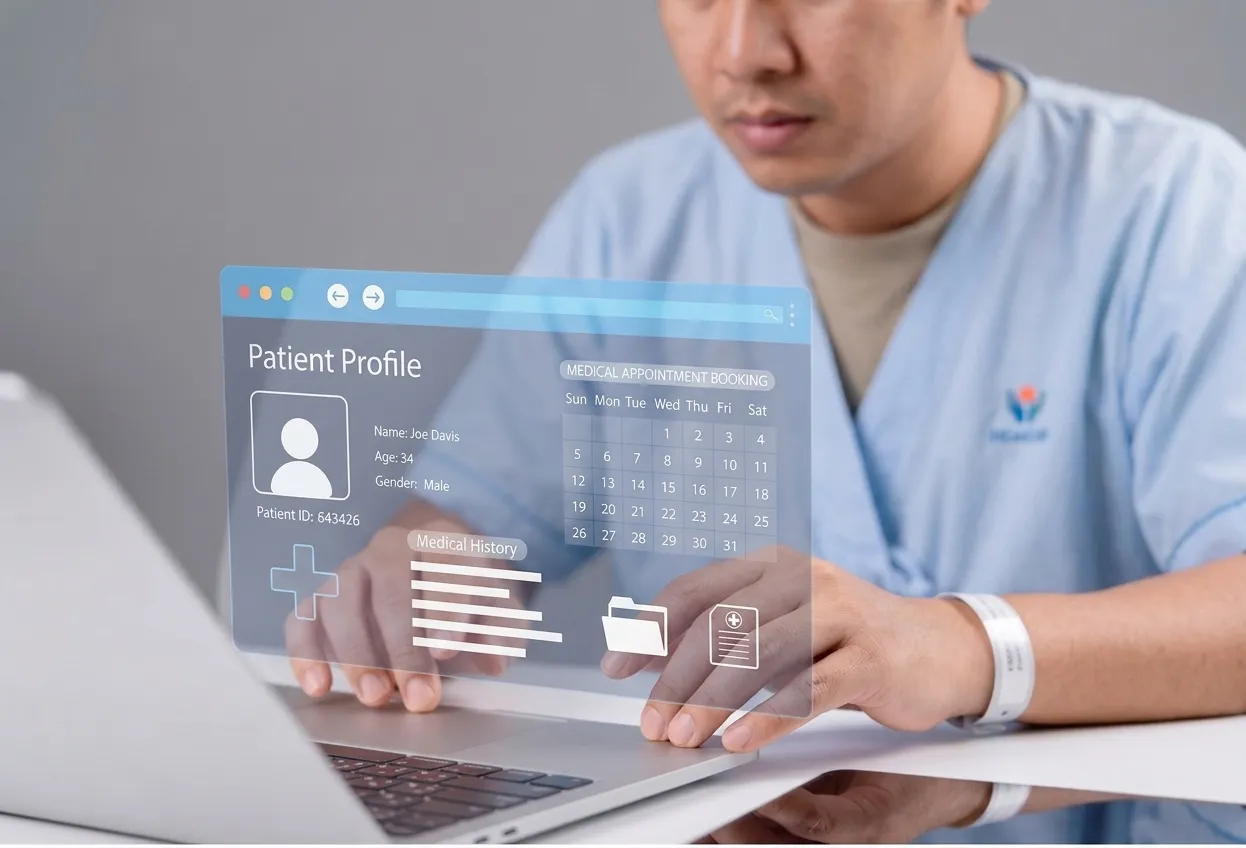
We connected the client's website booking to their EHR through APIs, so appointments booked online appear in the practice schedule instantly.

One API to Integrate with Every System You Use
Share data with EHRs and the wider healthcare ecosystem through a single, secure integration layer built on HL7 and SMART on FHIR.
Syntech Integration Bridge
1 API
Build once against our bridge and reach every connected system, with mapping, transformation and security handled for you.
- REST
- FHIR R4
- HL7 v2
- X12
Enterprise EHRs
Hospital and health-system platforms
Ambulatory EHRs
Clinic and physician practice systems
Specialty EHRs
Behavioral, fertility, dermatology and more
Practice Management
Scheduling, billing and front office
Labs (LIS)
Orders and structured results
Imaging (RIS/PACS)
Imaging orders and reports
Pharmacy & eRx
Prescriptions and medication history
Payers & Clearinghouses
Eligibility, claims and remittance
HIEs
Regional and national data exchange
Devices & Wearables
RPM and connected device data
Empowering Healthcare Innovation
- 250+
- Healthcare Projects
- 400+
- Healthcare Experts
- 98%
- Client Retention Rate
- 150+
- Healthcare Customers
- 50%
- Cost Saving on Development
Affordable & Flexible: Engagement Models for Every Need
Whether you need a dedicated team, project-based work or ongoing support, our flexible engagement models fit your needs.
I have a requirement and want to pay a fixed price
Fixed-Price Project
Share your requirements and we'll run a discovery call to understand them in detail, then give you a clear estimate and deliver high-quality work.
- Clear, upfront project estimate
- Milestone-based delivery
- Pay on completion and your satisfaction
I want to hire healthcare software developers hourly
Dedicated Hourly Developers
Hire dedicated developers with a full month of focused attention, transparent billing and daily timesheets, guided by a complimentary delivery manager.
- Full-time monthly focus
- Transparent billing & daily timesheets
- Complimentary delivery manager
Connect Disparate Systems Faster with Pre-Built Integration Components
Ready connectors, mappers and security components help us integrate your systems quickly, including medical devices and wearables.
Your Platform
Integration Bridge
Our Custom EHR Integration Services
Domain-Specific Accelerators
Reusable healthcare building blocks that shorten delivery without cutting corners.
End-to-End Digital Transformation
From discovery and design to deployment and support, one team owns the whole journey.
Interoperable Data Systems
HL7 and FHIR-ready architecture so data flows between every system in your care network.
Assured Compliance & Security
HIPAA-aligned practices, encryption and audit trails built in from day one.
Proficiency in Healthcare Standards
Hands-on experience with CMS programs, coding standards and clinical terminologies.
AI & Analytics-Powered Insights
Dashboards and AI models that turn care data into proactive decisions.
API-Based Connectivity Through Robust Integrations
Connect labs, pharmacies, billing and communication tools alongside your EHR. See our lab and e-prescription integration.

6 integrations
ePrescription & Labs
Secure prescribing, real-time lab exchange and interoperable clinical workflows.
- ePrescribing networksNationwide eRx with EPCS and medication history.
- Reference laboratoriesElectronic lab orders and structured results.
- Regional & hospital labsHL7 interfaces for local lab partners.
- Supplement dispensariesRecommend and order supplements from the chart.
- Drug databasesInteraction, allergy and formulary checks.
- Imaging centersOrder imaging and receive reports in the chart.
Tired of inefficient healthcare workflows?
Connected systems and interoperability can automate processes to save time and money.
Affordable Development Anytime, Anywhere
Our healthcare software developers understand the unique clinical needs and requirements of your practice, and follow a proven four-phase process.
- 01
Discovery
Domain Experts
Understand clinical workflows and real end-user needs.
Business Requirements
Shape a market-fit solution around your practice goals.
Wireframes & User Flows
Define key software functions and everyday user flows.
- 02
Development
Dynamic UI/UX
Elevated experiences for both patients and providers.
Sprint Planning
Plan the whole build carefully in short, focused sprints.
Coding & API Integration
Code built to meet all required compliance standards.
- 03
Testing
Manual Testing
Hands-on manual checks of every function and screen.
Automation Testing
Scripted tests for repeatable, reliable test coverage.
End-to-End Testing
Thorough end-to-end testing of clinical workflows.
- 04
Deployment
Secure & Compliant
Secure, HIPAA-compliant and scalable infrastructure.
Integration
Full application integration for a smooth, safe go-live.
Maintenance & Support
Feedback and audits for continuous product improvement.
Our Integration Developers' Framework & Technology Expertise
Experienced healthcare software developers and teams working across a wide range of technologies and frameworks.


Need better connectivity and data exchange between healthcare systems?
Sourcing Models for EHR/EMR Integration
Find the balance that suits your integration best and choose the sourcing model that fits your needs.
In-House
Your team leads the integration; we add specialist guidance, reviews and tooling where needed.
Hybrid
A mix of in-house and outsourced work, with our engineers owning the complex interfaces.
Fully Outsourced
We own the integration end to end, from requirements to go-live and support.
EHR Integration Insights
Everything about planning, building and maintaining healthcare integrations.
- Guides
EHR Integration: How to Do It Right
A practical walkthrough from requirements to go-live.
Read more - Guides
Step-by-Step EHR Integration Process
What happens at each stage of a custom integration project.
Read more - Standards
Introduction to HL7 for Healthcare Data Exchange
Message types, segments and where HL7 v2 still shines.
Read more - Standards
Using OAuth 2.0 for EHR Authentication
Securing app access to EHR data with modern auth flows.
Read more - Cost
Factors That Affect EHR Integration Cost
Scope, systems, data volume and support explained.
Read more - Cost
In-House vs Outsourced EHR Integration
Comparing cost, speed and risk across sourcing models.
Read more
Frequently Asked Questions
Still have questions?
Our healthcare engineers are happy to talk specifics.
EHR integration connects electronic health record systems with your other healthcare software so data flows between them. It gives teams a complete view of each patient, improves care coordination, reduces errors and makes operations more efficient, all of which support better decisions and outcomes.
EMRs digitize a single practice's charts for internal use, while EHRs provide a shareable view of a patient's health across providers. EHR integration therefore focuses on interoperability for coordinated care, while EMR integration mainly streamlines internal workflows.
It enables seamless data exchange between systems, giving clinicians complete patient histories, removing manual entry errors and avoiding duplicate tests, which leads to better-informed decisions and coordinated care.
Common data types include patient demographics, medical history (diagnoses, medications, allergies), lab and imaging results, vital signs, and clinical notes and treatment plans.
Providers get streamlined access to complete patient data, fewer errors and better decisions. Patients get better-coordinated care, fewer repeated tests and easier access to their own health information.
The main challenges are interoperability between different systems, accurate data migration, implementation and maintenance cost, staff training and adoption, and protecting sensitive patient data.
Yes. Integrated data can be exposed to breaches, unauthorized access and ransomware. Encryption, strict access controls, audit logging and secure transport protocols are essential to mitigate these risks.
Plan thoroughly, define clear goals and manage data carefully. Prioritize interoperability and security, train staff well, and keep monitoring and optimizing after go-live.
Automated data flow reduces errors in registration, coding and claims, leading to faster, more accurate billing, fewer denials and better cash flow.
Yes. Integration services move patient records and other data securely to new platforms through data mapping, cleaning and validation, keeping data intact and disruption low.
Standards like HL7 v2 and FHIR, along with CDA/CCD documents and X12 for billing, plus secure APIs. Automation tools can also help with data migration and synchronization.
AI automates data entry, improves accuracy, extracts information from unstructured notes using NLP and spots patterns and risks with predictive analytics, improving decisions and reducing admin work.
System complexity and customization, organization size, data migration volume, required infrastructure, staff training, and ongoing maintenance and support.
Custom integrations consolidate patient data, improve access and coordination, streamline clinical operations and reduce admin burden, built around your exact workflows instead of a one-size-fits-all connector.
Through encrypted EHR-to-EHR exchange, HIPAA-compliant patient and provider portals, secure file transfer protocols such as SFTP, and processes that follow HIPAA standards for protecting health information.
Request your EHR integration quote today
Partner with Syntech Labs for secure, HIPAA-compliant EHR integration services that keep your systems, teams and patient data connected.