AI Clinical Decision Support System
Fewer diagnostic errors, evidence-based care.
We build custom AI clinical decision support systems (CDSS) that bring evidence-backed diagnosis suggestions, treatment guidance and drug safety alerts into your EHR, helping clinicians reduce errors and improve patient outcomes.
AI Recommendation
Live in EHRLikely diagnosis
Community-acquired pneumonia
Suggested: amoxicillin + INR monitoring
- Clinical practice guidelines3 matched
- Peer-reviewed studies5 cited
- Patient history & labsEHR synced
Interaction flagged: clarithromycin + warfarin
Clinician makes the final call
Every Suggestion Shows Its Reasoning
Clinicians won't trust a black box, and they shouldn't. Our decision support shows the trail from symptoms to recommendation, with the evidence behind every step, the same protocol-based approach behind our AI medical nurse.
Symptoms
Cough, fever, shortness of breath
Reported over 3 days, worsening at night.
Findings
SpO₂ 93%, WBC 14.2, crackles right base
Pulled from vitals, labs and the exam note.
Differential
Pneumonia most likely
Bronchitis and PE considered and ranked lower.
Evidence
Guidelines and studies cited
Each step links to the source behind it.
Recommendation
Chest X-ray, then treat per guideline
Clinician reviews and decides.
Faster Diagnostics, Fewer Errors
Five capabilities that support clinicians from the first symptom to the final decision, delivered inside the chart through EHR integration.
01
Differential Diagnosis Assistance
Real-time diagnostic suggestions, explained and linked to evidence.
- AI-powered diagnosis suggestions
- Links to literature and guidelines
- Follow-up test suggestions
- Benchmarking against peer outcomes
- Visual explanation of reasoning
02
Research-Based Decision Support
The latest evidence, summarized and ready when clinicians need it.
- On-demand literature search
- Summarized clinical trial data
- Guideline synthesis
- Fast-reference clinical Q&A
- Evidence-based alerts
03
AI-Orchestrated Diagnostic Workflows
Several models working together in one smooth workflow.
- Multi-model chaining
- Appropriate test ordering
- Cost vs accuracy balancing
- Learning from real outcomes
- Clinician-in-the-loop validation
04
Safety Alerts & Error Reduction
Catch medication and order errors before they reach the patient.
- Drug–drug interaction checks
- Allergy and dosage alerts
- Protocol deviation reminders
- Real-time feedback on orders
- Learning from past error patterns
05
Training & Skill Sustainment
Support that keeps clinicians sharp instead of dependent.
- Feedback after case errors
- Simulation mode with benchmarking
- Skill dashboards
- Continuing education nudges
- Balanced AI use and proficiency
Wondering how AI could support your clinicians' decisions?
See explainable decision support working on real clinical scenarios in a free demo.
Help With the Questions Clinicians Ask Every Day
Hover over or tap a card to see a typical question and how decision support answers it.
Join Our Happy Clients: See What They Say
Clinicians and healthcare leaders share how AI decision support changed their practice.
It supports our physicians
It doesn't try to replace clinical judgment. It makes sure nothing important is missed.
Timely & Affordable AI Clinical Decision Support
Build decision support within your budget and timeframe. Not sure where to start? See our healthcare AI strategy consulting.
Complexity
Software complexity, functional scope and feature depth
Type
Software type, such as web, mobile, tablet or desktop
No. of Users
The expected number of users, roles and care locations
Integrations
Integrations required by your workflows and regulations
Compliance
Regulatory compliance and certification requirements
Security
Performance, security, usability and accessibility needs
Deployment
Deployment model, such as on-premise, cloud or hybrid
Sourcing
Sourcing model, team composition and engagement type
We deliver clinical decision support solutions in these timeframes
- Project kick-off
- 1 Week
- MVP release
- 2–4 Months
- New software versions
- Every 2–4 Weeks
Need an estimate for your decision support project?
Answer a few quick questions and we'll send you a tailored estimate.
Affordable & Flexible: Engagement Models for Every Need
Whether you need a dedicated team, project-based work or ongoing support, our flexible engagement models fit your needs.
I have a requirement and want to pay a fixed price
Fixed-Price Project
Share your requirements and we'll run a discovery call to understand them in detail, then give you a clear estimate and deliver high-quality work.
- Clear, upfront project estimate
- Milestone-based delivery
- Pay on completion and your satisfaction
I want to hire healthcare software developers hourly
Dedicated Hourly Developers
Hire dedicated developers with a full month of focused attention, transparent billing and daily timesheets, guided by a complimentary delivery manager.
- Full-time monthly focus
- Transparent billing & daily timesheets
- Complimentary delivery manager
Clinical Decision Support Success Stories
How we help healthcare organizations bring evidence to the point of care, in their existing EHR or in custom EHR software.
AI Clinical Alerts for a Cardiology Center
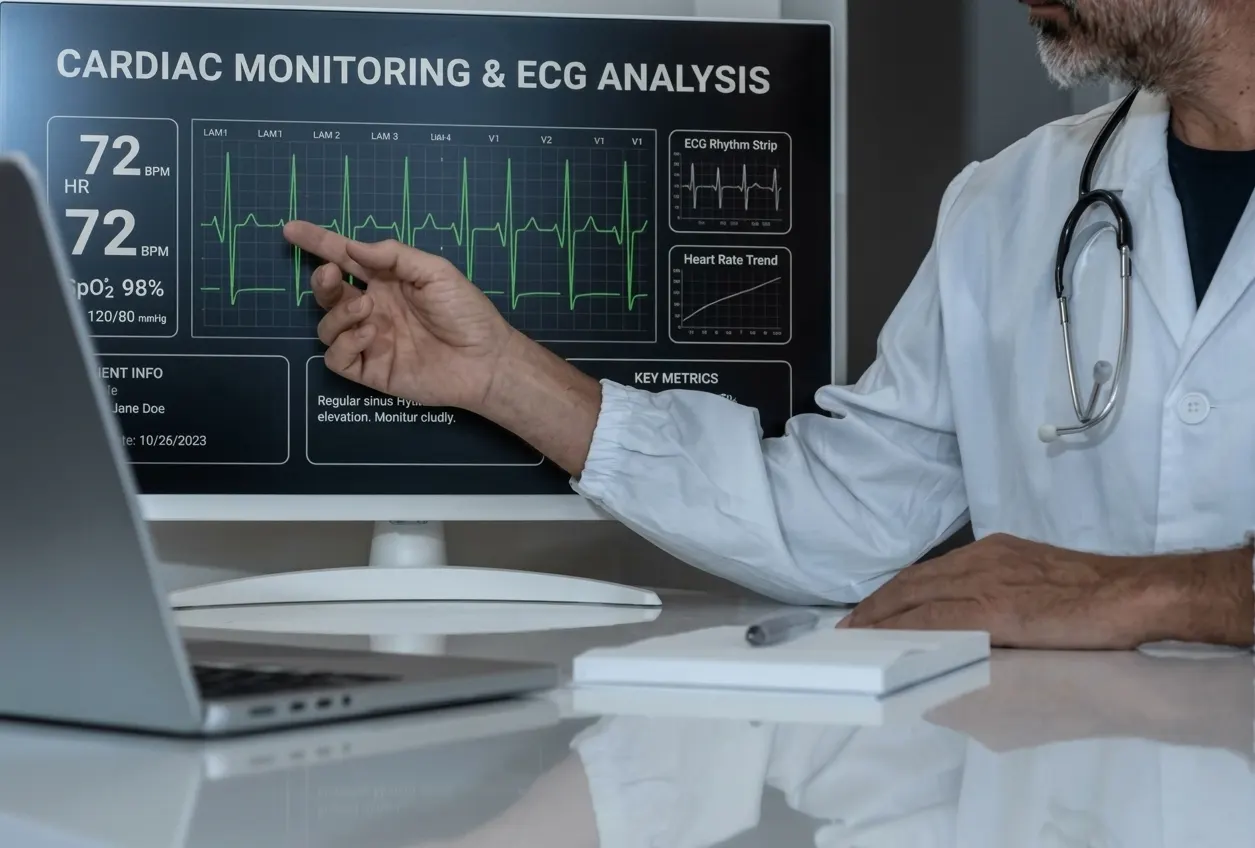
Clinical decision support surfaces critical alerts inside the cardiology workflow, helping clinicians spot high-risk patients quickly in a busy practice.

Frequently Asked Questions
Still have questions?
Our healthcare engineers are happy to talk specifics.
It analyzes patient data in real time and brings relevant, evidence-based insights into the clinician's workflow, such as likely diagnoses, safety alerts and guideline recommendations.
Diagnosis, medication safety, treatment protocols, risk stratification, discharge planning and preventive care reminders.
Its knowledge sources are updated regularly from current literature and guidelines, and every suggestion shows its citations and a confidence level.
Validation before go-live, uncertainty thresholds that hold back low-confidence suggestions, and clinician oversight on every decision. The AI suggests; clinicians decide.
Through EHR APIs and HL7 / FHIR, with alerts and suggestions shown in context at the point of care rather than in a separate tool.
History, medications, labs, vitals, imaging results and other relevant context, all processed in a secure, HIPAA-compliant environment.
Through retrospective testing on historical cases, pilot studies with your clinicians and ongoing monitoring of outcomes after go-live.
Alerts are prioritized by severity and tuned to your practice, so only critical issues interrupt clinicians and the rest appear quietly in context.
It flags them as beyond its scope and recommends specialist input instead of offering a low-confidence suggestion.
Yes. Depending on what the software does, clinical decision support can fall under FDA guidance for software as a medical device. We assess this early and design for compliance.
Let's build the ideal AI clinical decision support for your practice
Partner with Syntech Labs for explainable, HIPAA-compliant decision support that reduces errors and keeps clinicians in control.