
Hi-Tech / Quality Engineering
Quality
Engineering
Quality engineering and assurance for US businesses: manual and automated testing that finds bugs before your users do, from a team with 10+ years of experience.
End-to-End QA, Automation First
Testing for large, distributed and multi-tier applications, from the first test plan to tests running on every commit.
Quality engineering
Quality built in, not bolted on
We plan testing alongside development, automate what repeats, and keep people on the work that needs judgement.
- Manual
- Automated
- Mobile
- Performance
- CI/CD
Manual Testing
ISTQB-certified engineers test like real users. Included with our custom development, or available on its own.
Automation Testing
Test cycles, tooling and environments set up to speed up releases and catch defects earlier.
Mobile App Testing
Manual and automated testing on real devices, including Appium suites.
Performance Testing
Response time, reliability, resource use and scalability under real load.
Test Automation Strategy
Scope, tools, architecture and CI/CD integration aligned to your business goals.
Automated UI Testing
Selenium and Appium scripts written, run and maintained for you.
CI/CD Pipeline Testing
Automated tests on every change in GitLab or Jenkins pipelines.
Two Kinds of Testing. Sixteen Ways to Check
Functional testing checks what the software does. Non-functional testing checks how well it does it.
7 test types
Functional Testing
Does each feature do what the specification and users need?
- Unit
- The smallest pieces of code, tested early by developers.
- Integration
- Combined components working together correctly.
- Interface
- Data passed correctly between two components.
- System
- The whole system tested as one.
- Regression
- Changes haven't broken what already worked.
- Smoke
- Quick checks of key functions on a new build.
- Sanity
- Focused checks on new builds of stable apps.
9 test types
Non-Functional Testing
How well does it perform, scale, protect data and feel to use?
- Performance
- Speed, stability and resource use in real conditions.
- Load
- Behaviour under the expected number of users.
- Stress
- Beyond normal limits, and how it recovers.
- Volume
- Database performance with large data sets.
- Security
- Network, data, system and application security.
- Scalability
- Room to grow in servers, transactions and traffic.
- Usability
- Easy to navigate and remember.
- Maintenance
- How easily the app accepts updates.
- Compatibility
- Operating systems, browsers, devices and networks.
Want to battle-test your software?
Talk to our quality engineering team about your next release.
Testers Who Know Your Rules
Domain knowledge means we test for the regulations and workflows that matter in your industry.
- Standards
- HIPAA
- PCI DSS
- GDPR
- OWASP
- ISO 9001

Healthcare
HIPAA-compliant EHR/EMR, telehealth and practice management, tested against FHIR, HL7, SMART on FHIR and CCDA.
Explore Healthcare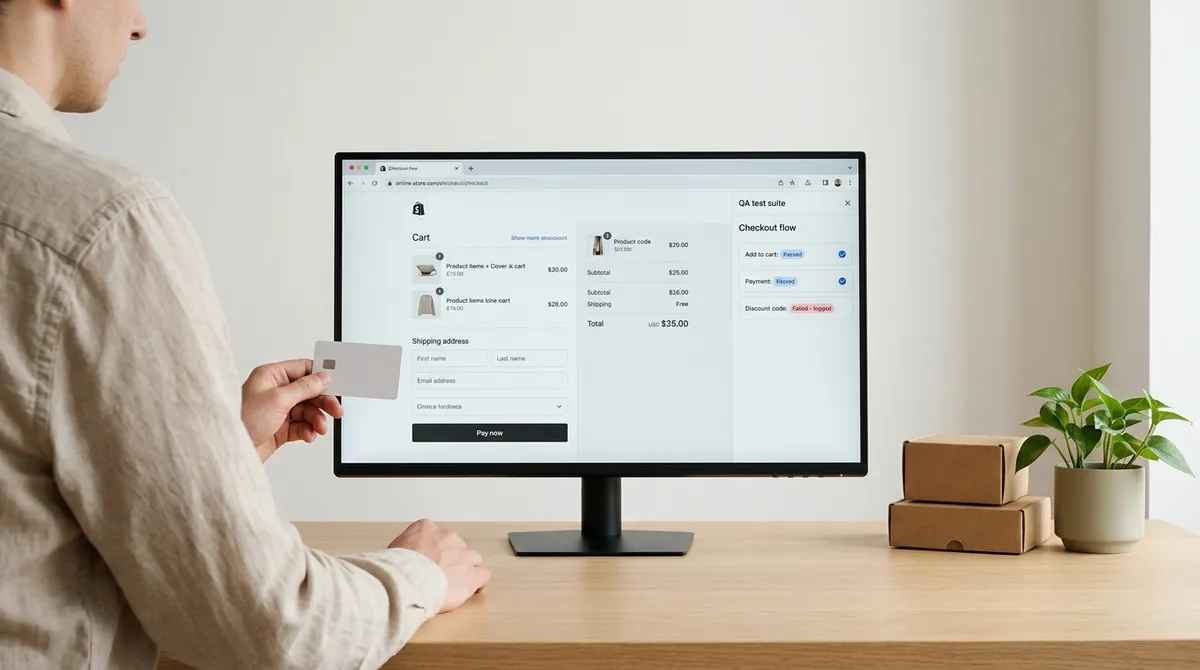
Retail & E-Commerce
ERP, POS, EDI and omnichannel commerce, from B2B portals to the checkout page.
Explore Retail & E-Commerce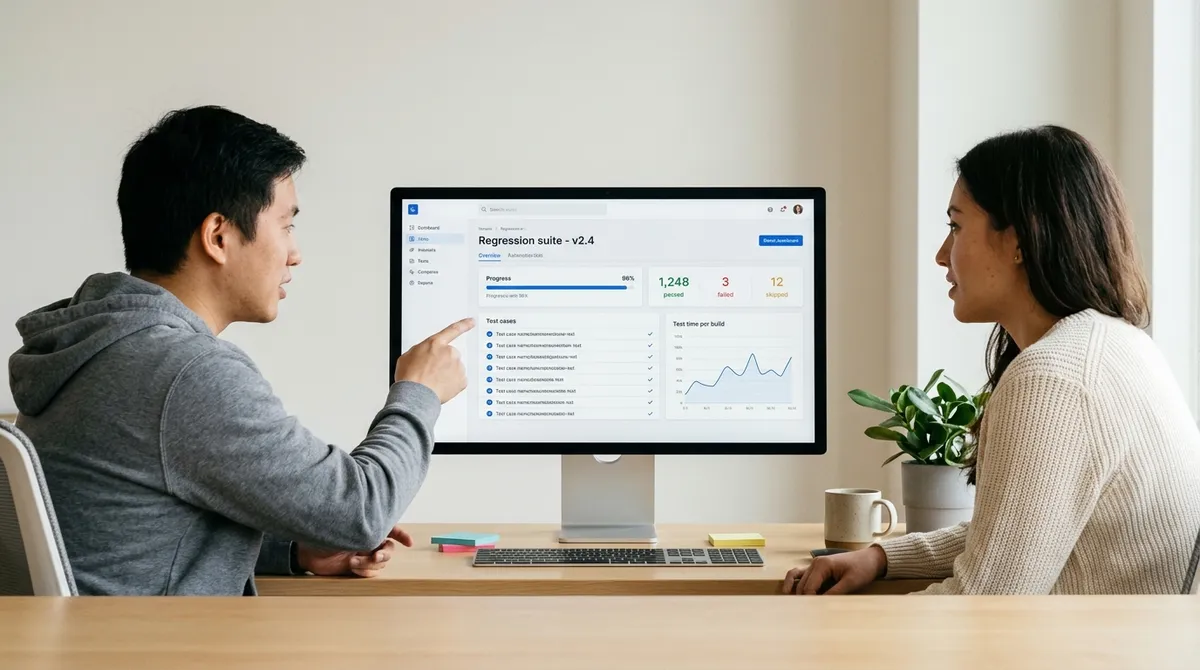
Software & Hi-Tech
Next-generation products for software companies and ISVs, tested as they scale.
Explore Software & Hi-TechThe Testing Stack We Work With
We fit into the tools you already use, or set up the right ones for you.
Scripting Languages
- Java
- Kotlin
- Python
- WebdriverJS
- TypeScript
Automation Frameworks
- Page Object Model
- Keyword-driven
- Data-driven
- Page Factory
- Hybrid
- Robot Framework
Automation Libraries
- Selenium WebDriver
- Appium
- Espresso
- XCUITest
Test Execution
- Selenium Grid
- BrowserStack
- Sauce Labs
- AWS Device Farm
Load & Performance
- JMeter
- Taurus
- BlazeMeter
- LoadRunner
Test Management
- Jira
- Zephyr
- Rally
- TestRail
Defect Management
- Jira
- GitHub
- GitLab
- Trello
- Redmine
- Asana
- BugHerd
Eleven Steps From Plan to Proof
- 01
Review the development plan
Check the plan is complete and estimate testing resources.
- 02
Develop the test plan
A testing strategy scaled to the level of risk.
- 03
Test the requirements
Make sure requirements are correct, complete and consistent.
- 04
Test the design
Verify internal and external design against goals.
- 05
Build-phase testing
Match testing to how the software is being built.
- 06
Execute tests
Run code against requirements and design specs.
- 07
Acceptance testing
Users confirm it fits their daily work.
- 08
Report results
Ongoing reports so bugs reach the right people fast.
- 09
Installation testing
Test in production, including links to other systems.
- 10
Test changes
Update the strategy when requirements change.
- 11
Evaluate effectiveness
Review what worked with testers, developers and users.
Testing that runs alongside your whole build.
Plan your testing →
Hire Software Testers Your Way
Three ways to work with our quality engineering team.
Frequently Asked Questions
Still have questions?
Our healthcare engineers are happy to talk specifics.
Professional verification and validation of your software: test planning, execution, defect tracking and reporting, so it works as intended.
Broad test coverage, industry knowledge, agile delivery, clear communication, modern tooling and a focus on on-time delivery.
QA is the wider process that makes sure software meets requirements and standards. Testing is the part of it focused on finding defects.
Functional testing checks that features work as required. Non-functional testing checks qualities like performance, usability, security and reliability.
Yes. We sign an NDA before every QA and testing engagement.
Release with confidence.
Partner with Syntech Labs for software testing that covers function, performance, security and usability.